By Amarachi Ezea,
Ngozi Ezeala
Siena, a small but mighty city, once stood at the heart of an artistic revolution that spread across Europe. Its influence reached far beyond Italy, leaving a mark on painters, metalworkers, weavers, and carvers. From gilded glass and illuminated manuscripts to ivory sculptures, silk fabrics, and exquisite rugs, Siena’s creative energy was unstoppable.
Now, an extraordinary exhibition, Siena: The Rise of Painting, 1300-1350, brings this golden era back to life. Organised by the National Gallery in collaboration with The Metropolitan Museum of Art, New York, it features over a hundred masterpieces crafted by artisans from Siena, Naples, Avignon, and beyond. Some of these works, long separated by continents, have been reunited for the first time in centuries.
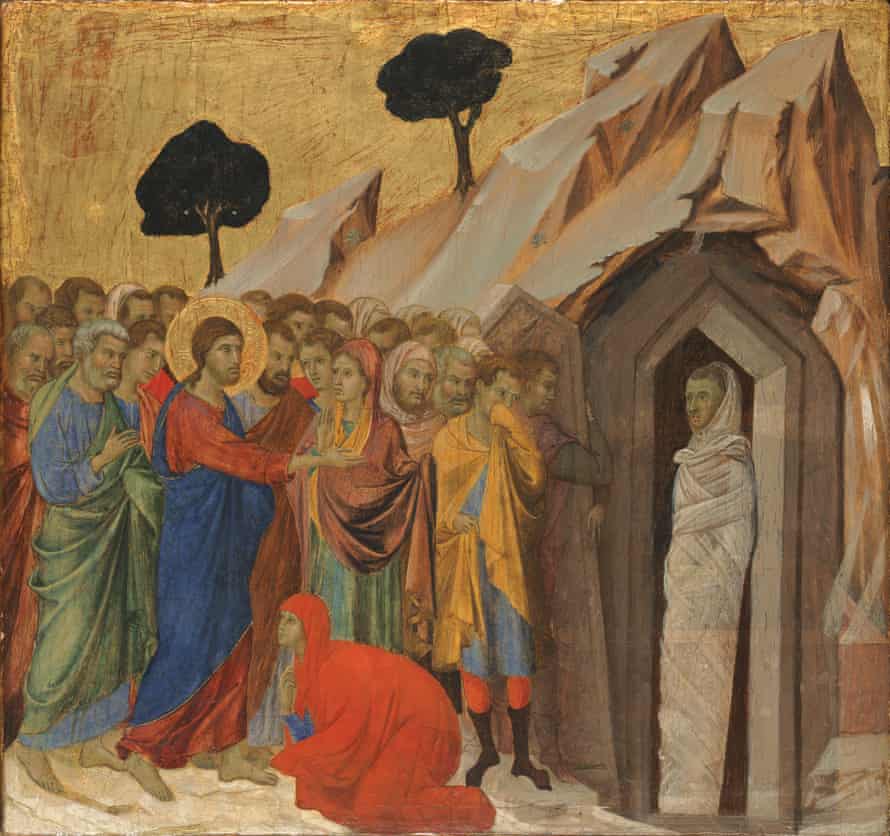
One of the exhibition’s highlights is a stunning altarpiece panel by Duccio di Buoninsegna, originally part of a grand, double-sided altar installed in Siena Cathedral in 1311. The front of the altar remains in Siena, but the wooden back panels were tragically dismantled in the 18th century, some lost forever, others scattered across the world.
Duccio’s paintings capture deep human emotions. In The Raising of Lazarus, for example, the bystanders react with a mix of shock, awe, and disbelief. A man closest to the grave even holds his cloak to his nose, recoiling from the stench of death. In another piece, Jesus prepares to heal a blind man, whose startled yet sorrowful gaze hints at the miracle about to unfold.
Duccio also had a gift for storytelling. His painting of young Jesus shows the boy sulking, arms stubbornly folded, as Joseph leads him home to his anxious mother, Mary. You can almost hear their conversation, Mary questioning him, Jesus responding with an air of defiance.
By the time visitors reach the Wilton Diptych, a famous masterpiece included in the exhibition, the connection between Siena and other European artistic traditions becomes clear. The unknown artist of this refined, gold-adorned painting must have drawn inspiration from the Sienese school of art.
Few of Duccio’s works have survived the passage of time, making this exhibition even more remarkable. His depiction of the devil, a dark, hairy figure, is particularly striking as he tries to tempt a serious-looking Christ. Another masterpiece portrays Siena itself as a tiny pink dollhouse, nestled within the rolling Tuscan hills.
One of the most moving pieces in the collection is Duccio’s weeping Virgin, shown grieving at the crucifixion. She is tenderly held by companions, just as she once held the infant Jesus. In another vision of Christ’s return, his blood transforms into blazing scarlet wings, a powerful symbol of resurrection and hope. What makes Sienese art so special is not just how it portrays biblical stories, but how it captures the emotions of the people in them, their fears, joys, and struggles. It allows us to feel what they felt, bringing history to life in a deeply personal way.
By 1350, Siena’s golden age had ended. The Black Death, which struck in 1348, wiped out more than a third of the city’s population, including many of its greatest artists. The once-bustling streets fell silent, and Siena never truly recovered its former glory until the 20th century.
Yet, before the plague, Siena was a city of wealth, culture, and ambition, famous for its goldsmiths, grand cathedral, dramatic horse races, and, of course, its incredible artists.
This exhibition is a celebration of Siena’s artistic legacy. From the works of Duccio, Simone Martini, and the Lorenzetti brothers to the delicate craftsmanship of goldsmiths and textile workers, it captures a world of beauty, faith, and creativity.
Everything is displayed with perfect lighting and a dark backdrop, making the gold accents shimmer as they were meant to. Among the treasures is a gilded silver chalice, richly decorated with vibrant enamel, the kind of work that was once sought after across Europe.
As visitors leave, they encounter one last masterpiece, the Wilton Diptych. Though not made in Siena, it reflects the city’s lasting influence on European art. Siena’s brilliance stretched far beyond its walls, shaping the course of art history for generations to come.
This beautiful exhibition is a chance to experience the heart and soul of a city that once shone as one of the greatest artistic centres in history.